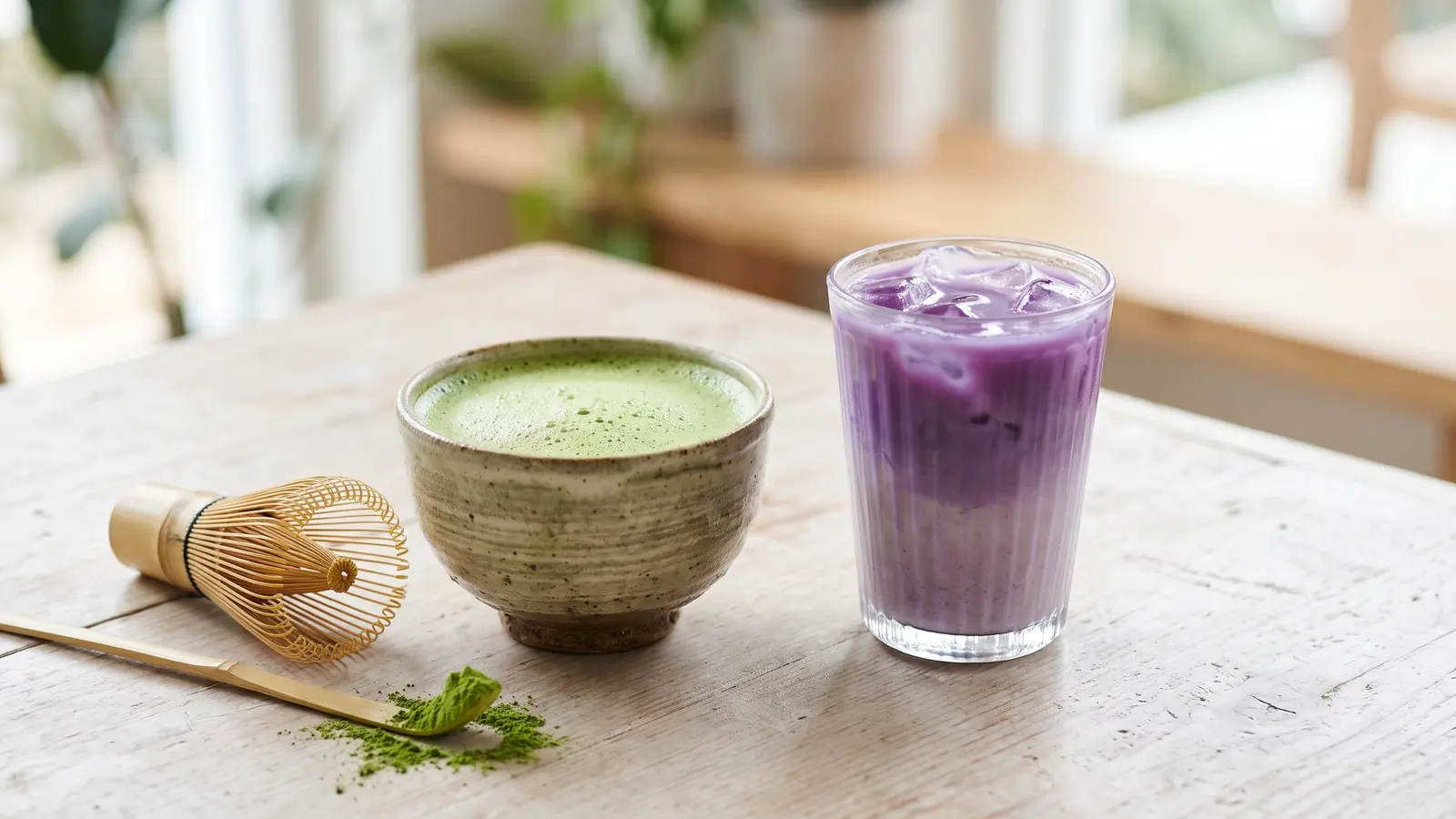
Short answer
Ceremonial grade matcha is a label for the smoothest, sweetest matcha, meant to be whisked with water and drunk plain. There is no single legal standard, so the term varies by brand, and culinary grade suits lattes and baking.
Ceremonial grade matcha is a label for the finest, smoothest matcha, meant to be whisked with hot water and drunk plain. It is usually made from the youngest shaded leaves and tastes sweeter and less bitter than other grades. There is no single legal definition, so the word means slightly different things from brand to brand.
What does ceremonial grade matcha mean?
Ceremonial grade matcha means the producer considers the powder good enough to drink on its own in a tea ceremony style, whisked with water. The term comes from the use of matcha in Japanese tea ceremony, though modern brands apply it freely.
It does not come from an official grading body. Instead, brands decide what to call their top tier, which is why one company’s ceremonial grade can be better than another’s.
What is the difference between ceremonial and culinary grade matcha?
Ceremonial grade is smoother, sweeter and brighter green, while culinary grade is stronger, a little more bitter and meant to be mixed with milk, sugar or other ingredients. The difference is in the leaves and the intended use.
| Ceremonial grade | Culinary grade | |
|---|---|---|
| Intended use | Whisked with water | Lattes, baking, cooking |
| Leaves | Youngest, softest | Slightly more mature |
| Colour | Vivid, bright green | Often a bit duller or yellower |
| Taste | Sweet, savoury, little bitterness | Stronger, more bitter |
| Texture | Very fine, silky | Fine, sometimes a little coarser |
| Cost | Higher | Lower |
Culinary does not mean poor. A good culinary matcha is built to hold its flavour under milk and sugar.
What grades of matcha are there?
Matcha is commonly sold in a few tiers, usually ceremonial, premium or latte, and culinary. The names are not standardised, so treat them as rough guides and read the product description.
- Ceremonial: for whisking with water and sipping.
- Premium or daily: a middle tier, good for lattes and plain tea.
- Latte or cafe grade: made to stand up to milk.
- Culinary or ingredient grade: for baking, ice cream and sauces.
Some brands skip these words and just describe harvest time, cultivar and flavour notes instead, which can be more useful than the grade name.
How is ceremonial grade matcha made?
Ceremonial grade matcha is made from tencha, the shaded leaf that has been steamed, dried, de-stemmed and slowly stone-ground. The leaves chosen are usually the first harvest of the year, picked young.
Shading before harvest raises the savoury, sweet flavour and keeps the colour vivid. Slow grinding keeps the powder cool and very fine. Faster industrial grinding of mature leaves is more typical for lower grades.
How can you tell if matcha is good quality?
Good matcha has a vivid green colour, a fresh sweet smell, a very fine texture and a clean, smooth taste. You can judge much of this before you ever whisk it.
- Colour: bright green, not olive, yellow or brown.
- Smell: fresh and sweet, like young grass, not dusty.
- Texture: silky and fine, with no gritty feel.
- Origin: a stated region and producer.
- Ingredients: only green tea leaf.
- Taste: sweet with savoury depth, and bitterness that fades fast.
Harvest date, cultivar names such as Samidori or Okumidori, and packaging in sealed tins or foil are also positive signs.
How do you prepare ceremonial grade matcha?
Prepare ceremonial grade matcha by sifting 1 to 2 grams into a bowl, adding about 70 ml of water at 70 to 80 degrees Celsius, and whisking in a quick zigzag motion until a fine foam forms. Drink it at once.
- Use a bamboo whisk and a wide bowl.
- Warm the bowl first with hot water.
- Skip milk and sweetener to taste the powder itself.
- Serve in small sips, since the flavour is concentrated.
If it tastes bitter, the water is likely too hot or the powder too much.
Why is ceremonial grade matcha more expensive?
Ceremonial grade matcha costs more because the leaves are picked young, sorted carefully and ground slowly, which gives a smaller yield for the same amount of work. Rarity of the first harvest also plays a part.
Shading the bushes, hand sorting, de-stemming and stone grinding all take time, and a stone mill produces only a small amount of powder per hour. Brand, origin and packaging add to the final cost. A higher price does not guarantee a better cup, so compare colour, smell and description rather than price alone.
How long does ceremonial grade matcha keep?
An unopened, sealed tin of ceremonial grade matcha keeps for months, usually to the date printed on the pack, while an opened tin is best used within a couple of months. Fine powder fades faster than coarse tea leaves.
- Keep the tin airtight and away from light and heat.
- Refrigerate an opened tin and let it warm up before opening it.
- Buy a size you can finish soon, since the whole point of the grade is fresh flavour.
- Smell the powder each time: when the sweet green aroma turns flat, move it to baking.
Should you use ceremonial grade matcha in lattes?
You can, but you do not have to. A ceremonial grade matcha latte tastes smooth, yet milk and sweetener cover many of the fine notes you are paying for.
Many people choose a latte or premium grade for milk drinks and keep ceremonial grade for drinking plain. In baking and cooking, culinary grade is the standard choice because heat softens delicate flavour.
Does Café 2nd Gen say which matcha grade it uses?
The matcha grade used by Café 2nd Gen is not stated in any source read for this guide, so this guide cannot say whether the cafe uses ceremonial grade. This is a general explainer, not a statement about the cafe.
What the sources do record are the drinks: Ube matcha topped with ube foam, the Matcha Melona and the Matcha tiramisu. If the grade matters to you, ask the staff at the cafe or message its Instagram account. No prices have been found for any item.
The menu page lists the recorded drinks and the hours and location page shows when the cafe is open. This guide is independent and takes no orders.
Common questions
Is ceremonial grade matcha regulated?
No single international rule defines it. Ceremonial is a marketing term brands use for their finest powder, so quality can differ between labels. Colour, smell, origin and a clear harvest description are better clues than the word alone.
Can you make a latte with ceremonial grade matcha?
Yes, nothing stops you. Milk and sugar mask some of its delicate sweetness, though, so many cafes and home cooks keep ceremonial grade for drinking with water and use a sturdier everyday grade for lattes.
What is the difference between usucha and koicha?
Usucha is thin matcha tea, about 2 grams of powder in 70 ml of water, light and frothy. Koicha is thick tea with roughly double the powder in less water, with a syrupy texture.
What grades are below ceremonial?
Many brands use premium, latte, cafe, everyday, ingredient or culinary grade. The names are not standardised, so read the description and the recommended use, such as lattes or baking, on the pack.
Does a higher grade mean a darker green?
Often a brighter, more vivid green points to young, shaded leaves, but colour alone is not proof. Smell, fineness and taste matter too, and poor storage can dull even a good powder.
Looking for the basics? Café 2nd Gen address and opening hours are on the home page.
This article is general information from an independent guide, not from Café 2nd Gen itself. For the store’s current details see hours and location.