Short answer
Matcha is a fine green powder made from shade-grown tea leaves that are steamed, dried and ground in stone mills. You whisk the whole powder into water or milk, so you drink the leaf itself rather than an infusion.
Matcha is a fine green tea powder made from tea leaves that were grown in shade, steamed, dried and ground in stone mills. Unlike ordinary tea, matcha is not steeped and strained: the whole powder is whisked into hot water or milk, so you drink the leaf itself. That is why matcha is so bright green and so concentrated in flavour.
What is matcha made of?
Matcha is made of one ingredient: leaves of the tea plant, Camellia sinensis, ground into powder. Nothing is added to a plain tin of matcha, so the colour and flavour come from how the leaves were grown and processed.
The same plant gives black, oolong and other green teas. What sets matcha apart is the shading before harvest, the careful removal of stems and veins, and the grinding of the whole leaf. The leaf used for matcha is called tencha before it is milled.
How is matcha grown and ground?
Matcha is grown by covering the tea bushes with shade for roughly the last few weeks before harvest, then picking the young leaves, steaming them, drying them and grinding them very fine. Each step shapes the colour and taste.
- Shading. Growers cover the bushes so less sunlight reaches the leaves. The leaves stay a deeper green and develop a more savoury, sweet flavour.
- Picking. The youngest, softest leaves are picked, usually in spring.
- Steaming. A short steam stops the leaves from darkening and keeps the green colour.
- Drying and sorting. The leaves are dried flat, and stems and veins are removed. The result is tencha.
- Grinding. Tencha is ground to a powder, traditionally between granite stones. It is a slow process, which is part of why good matcha is not cheap.
Why is matcha so bright green?
Matcha is bright green because the shaded leaves keep a high amount of chlorophyll and because the steaming step fixes the colour. Fresh, well made matcha looks vivid, almost jade or emerald.
Dull, yellowish or brownish matcha usually points to older powder, leaves grown without shade, or poor storage. Colour is one of the quickest ways to judge a tin of matcha powder.
What does matcha taste like?
Matcha tastes grassy, slightly sweet and a little bitter, with a smooth, savoury depth that Japanese tea drinkers call umami. Good matcha leans sweet and creamy, while rougher powder tastes sharp and bitter.
Taste changes with grade, water temperature and what you mix it with. Milk and sweetener make matcha rounder and gentler, which is why most cafe drinks use matcha in lattes.
How do you drink matcha?
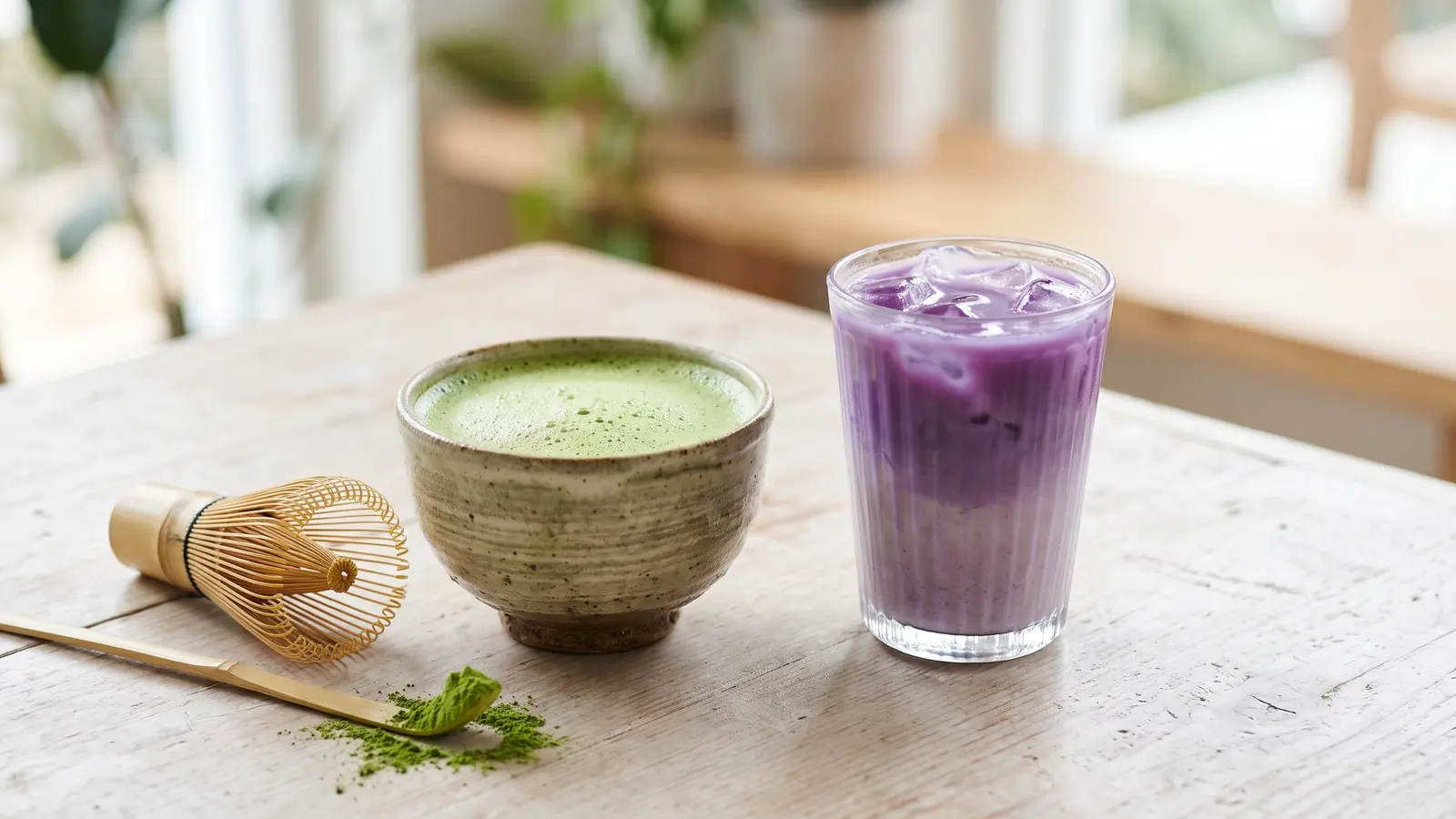
Matcha is traditionally whisked with hot water in a wide bowl using a bamboo whisk until it is frothy, but it is just as often mixed into milk drinks. The powder is suspended in the liquid and not dissolved, so you drink all of it.
| Style | What goes in | Typical texture |
|---|---|---|
| Usucha (thin tea) | About 2 g powder, around 70 ml hot water | Light and frothy |
| Koicha (thick tea) | Roughly double the powder in less water | Thick, like paint |
| Matcha latte | Whisked matcha plus steamed or cold milk | Creamy and mild |
| Iced matcha | Whisked matcha over ice and water or milk | Cool and fresh |
Water for matcha is usually kept below boiling, around 70 to 80 degrees Celsius, to avoid a harsh taste. A sieve helps break up clumps before whisking.
What is the difference between matcha and green tea?
The difference is in how the leaves are grown and used. Matcha uses shade-grown leaves ground whole and consumed whole, while regular green tea uses sun-grown or lightly shaded leaves that are steeped and then discarded.
| Matcha | Steeped green tea | |
|---|---|---|
| Plant | Camellia sinensis | Camellia sinensis |
| Growing | Shaded before harvest | Often grown in full sun |
| Form | Fine powder | Whole or rolled leaves |
| Preparation | Whisked into the liquid | Steeped and strained |
| Colour of drink | Opaque, bright green | Clear, pale green to gold |
Hojicha, a roasted green tea, is another relative. It is brown and toasty instead of green and grassy, and it is often sold as a powder too.
What is ceremonial grade versus culinary grade?
Ceremonial grade is the label for matcha meant to be drunk with water, while culinary grade is meant for lattes, baking and cooking. There is no single legal standard, so brands use the words loosely.
Generally, ceremonial grade is made from the youngest leaves and is smoother and sweeter. Culinary grade is a little stronger and more bitter, which stands up better when mixed with milk and sugar.
How do you store matcha?
Matcha keeps best in an airtight container, away from light, heat and moisture, and many people keep an opened tin in the refrigerator. The fine powder loses colour and aroma quickly when exposed to air.
- Close the tin or pouch tightly after each use.
- Keep it out of direct sunlight and away from the stove.
- Let a cold tin come to room temperature before opening, so no condensation forms on the powder.
- Use an opened tin within a couple of months for the best flavour, or follow the date the brand prints.
What mistakes make matcha taste bad?
The usual mistakes are boiling water, too much powder, skipping the sieve and using stale powder. Each one is easy to fix, and fixing them changes the taste more than buying a more expensive tin does.
- Water too hot. Boiling water scorches the powder and brings out bitterness.
- Lumps. Matcha clumps when it is not sieved, and clumps taste dry and bitter.
- Weak whisking. Without a quick whisk the powder settles and the drink looks flat.
- Old powder. Matcha that has sat open for months turns dull and flat.
How do cafes use matcha?
Cafes whisk matcha into a smooth shot, then pour it over milk, ice or both, and often add a flavoured topping or syrup. This makes matcha drinks easy to vary: a strawberry layer, a sesame foam or a scoop of ice cream can all sit alongside the green.
The standard tools are a bamboo whisk, a bowl or pitcher, a small sieve and a scoop. Many home cooks use a handheld milk frother when they do not own a whisk.
What matcha drinks does Café 2nd Gen list?
Café 2nd Gen is a matcha and Vietnamese coffee cafe on Rue William in Old Montréal. The drink names recorded for this guide come from Tastet, The Main and RestoMontréal, not from a published menu.
The recorded matcha items are the Ube matcha (matcha topped with purple ube foam), the Matcha Melona, the Matcha tiramisu and the Iced ube latte. Tastet also describes a seasonal black sesame foam that can sit on matcha, coffee or hojicha, hot or iced. No prices were found, so none are given here, and the lineup can change.
To see the recorded list, open the menu page, and check the hours and location page before you go. This guide is independent and takes no orders.
Common questions
Is matcha the same as green tea?
Matcha comes from the same plant as other green teas, Camellia sinensis, but it is grown in shade and ground whole. Ordinary green tea leaves are steeped and removed, while matcha powder is stirred into the drink.
Where does matcha come from?
Matcha is most closely linked with Japan, where the shade-growing and stone-grinding methods were refined. Uji in Kyoto Prefecture and Nishio in Aichi are two regions often named. Tea powders are also made elsewhere.
Why does matcha taste bitter sometimes?
Bitterness usually comes from water that is too hot, too much powder, or older or lower quality powder. Water around 70 to 80 degrees Celsius and a fresh tin tend to give a smoother, sweeter cup.
What is the difference between matcha and matcha latte?
Matcha is the powder whisked with water. A matcha latte mixes that whisked tea or a smooth paste with steamed or cold milk, and often a sweetener, so the flavour is rounder and milder.
Can you cook with matcha?
Yes. Matcha is used in baking, ice cream, shortbread and sweet sauces. Cooks usually choose a culinary grade for this, because milk, sugar and heat soften the delicate flavours of finer powder.
Everything practical is on the home page: Café 2nd Gen hours, menu and directions.
This article is general information from an independent guide, not from Café 2nd Gen itself. For the store’s current details see hours and location.