Short answer
Matcha tea is a drink made by whisking finely ground, shade-grown green tea leaf into hot water. Unlike steeped green tea, the powder is not strained out, so the drink is opaque, bright green and fuller in flavour.
Matcha tea is a drink made by whisking finely ground, shade-grown green tea leaf into hot water until it is frothy. Because the whole powdered leaf goes into the cup instead of being steeped and strained out, matcha tea is opaque, bright green and fuller in flavour than ordinary green tea.
What is matcha tea?
Matcha tea is the traditional Japanese way of drinking matcha: powder whisked with hot water in a bowl. The word matcha means ground tea, and the drink is the center of the Japanese tea ceremony.
The powder is made from tencha, shaded tea leaf that has been steamed, dried and stone-ground. Nothing else is added in the traditional bowl, though cafes also serve matcha with milk, ice, fruit and flavoured foams.
How is matcha tea made?
Matcha tea is made from tea bushes shaded before harvest, with young leaves picked, steamed, dried, de-stemmed and ground, and then the powder is whisked into water. The first part happens at the producer, and the last at the cup.
- Shade-growing: the bushes are covered for the last few weeks before picking.
- Steaming and drying: a short steam keeps the green colour, and the leaves are dried flat.
- Sorting: stems and veins are removed, leaving tencha.
- Grinding: tencha is milled slowly to a very fine powder.
- Whisking: at the cup, the powder is sifted and whisked into hot water.
How do you prepare a bowl of matcha tea?
Prepare matcha tea by sifting 1 to 2 grams of powder into a bowl, adding about 70 ml of water at 70 to 80 degrees Celsius and whisking quickly until a fine foam covers the surface. Drink it straight away.
- Warm the bowl with hot water and dry it.
- Sift the powder through a small sieve to break up clumps.
- Pour in a little hot water and mix to a smooth paste.
- Add the rest of the water.
- Whisk in a fast zigzag, wrist moving, not the whole arm, until a layer of tiny bubbles forms.
- Drink the tea while it is still frothy.
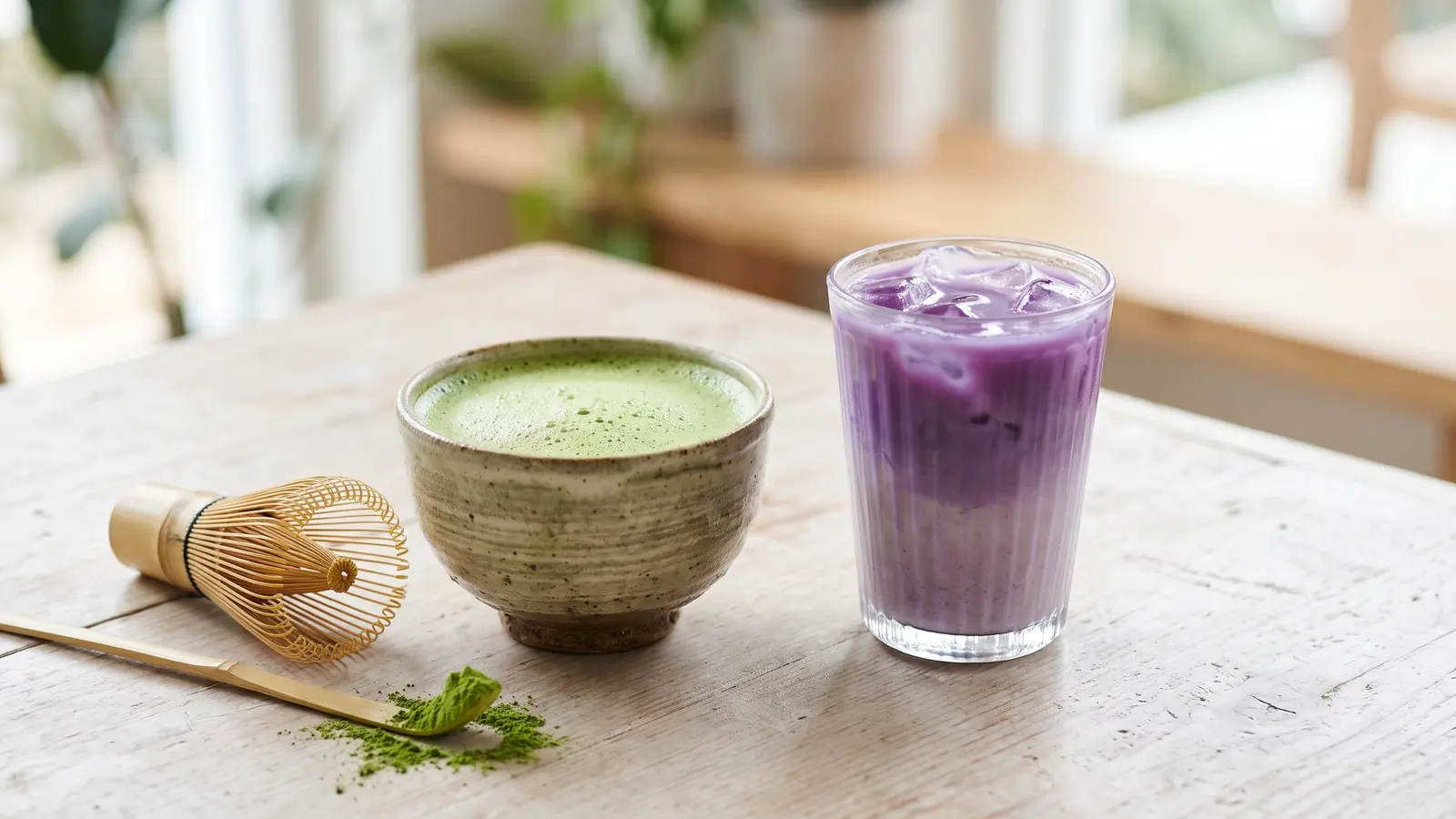
The tools are a bowl, a bamboo whisk, a scoop and a sieve. A handheld frother can replace the whisk.
How does matcha tea differ from green tea?
Matcha tea differs from regular green tea in how the leaves are grown, processed and drunk. Matcha uses shaded leaves ground to powder and consumed whole, while green tea uses leaves that are steeped and then removed.
| Matcha tea | Steeped green tea | |
|---|---|---|
| Leaf | Shade-grown, ground whole | Sun-grown or lightly shaded, whole leaf |
| Form | Powder | Loose leaves or tea bags |
| Method | Whisked into water | Steeped in hot water, then strained |
| Look | Opaque, bright green, frothy | Clear, pale green or gold |
| Taste | Savoury, sweet, grassy, full-bodied | Lighter, cleaner, sometimes more astringent |
| Tools | Whisk, bowl, sieve | Teapot or mug, strainer |
Both come from the same plant, so the difference comes from growing and processing, not from a different species.
What does matcha tea taste like?
Matcha tea tastes grassy, slightly sweet and savoury, with a creamy body and a touch of bitterness that fades quickly. Better powder tastes sweeter and rounder, while lower quality powder tastes sharp.
Water temperature changes the result. Cooler water brings out sweetness, while very hot water pushes bitterness. Adding milk, as in a latte, makes the drink creamier and milder.
What kinds of matcha tea are there?
Matcha tea comes in thin tea, thick tea and milk or iced versions. The first two are traditional, and the others are modern cafe styles.
- Usucha: thin tea, light and frothy, the everyday style.
- Koicha: thick tea made with about twice the powder, syrupy and rich.
- Matcha latte: matcha with steamed or cold milk.
- Iced matcha: matcha over ice with water or milk.
- Flavoured matcha: with fruit, sesame, ube or other toppings.
Koicha needs very good powder, and it is usually shared in a ceremony. Most home and cafe drinks are usucha or latte style.
What do you need to make matcha tea at home?
You need matcha powder, a bowl, a whisk or frother, a sieve and a scoop, and a kettle that can be set below boiling. A simple bowl and a mug will start you off.
- Bowl: a wide bowl gives the whisk room to move.
- Bamboo whisk (chasen): makes the finest foam.
- Scoop (chashaku): a small bamboo spoon, about 1 gram per scoop.
- Sieve: removes clumps.
- Kettle: water cooled to 70 to 80 degrees Celsius.
Separate guides cover the whisk and the bowl in more detail.
Where does matcha tea come from?
Matcha tea comes from Japan, where shade-grown tea and stone-ground powder were developed over centuries and are still closely tied to regions such as Uji in Kyoto Prefecture and Nishio in Aichi. The drink itself has roots in powdered tea that Buddhist monks brought from China.
The exact early history is told differently in different sources, so it is best to say only that powdered tea reached Japan from China and became part of tea ceremony there. Today tea powder is also grown and ground in other countries, and labels usually name the origin.
What mistakes spoil matcha tea?
The most common mistakes are water that is too hot, powder that is not sifted and a whisk that is too slow. All three are quick to fix and change the taste noticeably.
- Boiling water: let the kettle cool for a minute or two first.
- No sieve: clumps stay dry in the middle and taste bitter.
- Too much powder: more is not always better, and thick tea is meant for koicha only.
- Slow whisking: the foam never forms and the powder sinks.
- Old powder: flat colour and smell mean the tin is past its best.
How should matcha tea powder be stored?
Matcha tea powder should be stored airtight, cool and dark, since light, air and heat dull the colour and flavour. Refrigerate an opened tin and let it warm to room temperature before opening.
Use an opened tin within a couple of months for the best taste. If the powder smells flat or looks brown, it is better suited to baking than to a bowl of tea.
Does Café 2nd Gen serve matcha tea?
Café 2nd Gen is known for matcha drinks, but sources describe them as lattes and flavoured drinks rather than a plain bowl of matcha tea. This guide does not know whether a plain matcha is offered.
The recorded matcha items are the Ube matcha, the Matcha Melona and the Matcha tiramisu, plus an Iced ube latte and a seasonal black sesame foam. None of the sources list prices. Ask the staff about plain matcha or other options.
The menu page shows the items recorded for this guide, and the hours and location page has the opening hours. This guide is independent and takes no orders.
Common questions
How is matcha tea different from regular green tea?
Both come from Camellia sinensis. Regular green tea is steeped and the leaves are removed. Matcha is made from shaded leaves ground to powder and whisked into the water, so you drink the whole leaf.
What temperature water is best for matcha tea?
Most guides suggest about 70 to 80 degrees Celsius, which is hot but below boiling. Boiling water can scorch the powder and give a bitter, harsh taste. Cooler water gives a sweeter bowl.
Do you need a bamboo whisk to make matcha tea?
A bamboo whisk, called a chasen, gives the finest foam, but it is not essential. A small electric frother or a tightly closed shaker bottle can mix the powder into water well enough.
Can you drink matcha tea cold?
Yes. Whisk the powder with a little water until smooth, then pour it over ice and add cold water or milk. Cold matcha needs good whisking so the powder does not settle at the bottom.
Why is my matcha tea gritty?
Grit comes from clumps that were not sifted out, powder that was not whisked long enough, or lower quality, coarser powder. Sifting before whisking and using fresh powder both help.
This page is part of the independent guide to Café 2nd Gen, which has the address, hours and menu.
This article is general information from an independent guide, not from Café 2nd Gen itself. For the store’s current details see hours and location.